A new star rising

From workforce pressure to connected people operations

Build a more resilient healthcare workforce, reduce the operational friction that strains your people, and connect workforce decisions to better performance and patient care.
Workforce decisions shape more than staffing. They affect labor costs, operational performance, employee experience and the ability to deliver consistent patient care.
By connecting workforce, HR, payroll, finance and operational data, healthcare organizations can make smarter decisions about their people while reducing administrative burden and building a more resilient workforce.

The healthcare workforce challenge by the numbers

50%+

Labor can represent more than half of hospital operating expenses, making workforce decisions financial decisions too.

Source: American Healthcare Association

75%

Of nursing managers spend excessive time fixing inaccurate schedules.

Source: Independent research conducted by CMSWire and commissioned by Infor, “Behind the Curtains: Healthcare’s Quiet Battle with Burnout and Technology Lag”

57%

Of healthcare leaders report that time and attendance tracking remains manual.

Source: Independent research conducted by CMSWire and commissioned by Infor, “Behind the Curtains: Healthcare’s Quiet Battle with Burnout and Technology Lag”

29.5%

Of new hospital hires leave within their first year.

Source: 2026 Hospital Turnover Report (The Resource), NSI Nursing Solutions

7 in 10

Healthcare leaders expect labor costs to keep rising year over year.

Source: Cross Country Healthcare, 2026 Healthcare Workforce Outlook

Workforce strategy is healthcare strategy

Keeping the right people in the right roles takes more than filling shifts. Workforce stability depends on how well healthcare organizations connect recruiting, scheduling, payroll, workforce planning and employee experience with the operational realities of delivering care.
When those decisions work together, organizations can reduce friction for employees, give managers better information and respond more effectively to changing workforce needs.

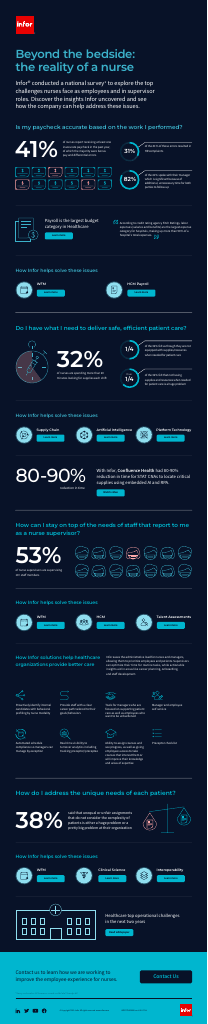
What workforce pressure really means for care delivery

REPORT

Administrative burden, workforce friction and operational instability pull attention away from patients. Explore why stronger workforce operations are foundational to supporting care teams.

Build stronger teams with better talent intelligence

BLOG

Finding people is only part of the challenge. Better insight into skills and role fit can help healthcare organizations build stronger, more stable teams.

Make technology work for the people using it

WEBINAR

Technology delivers value when employees adopt it. Learn how a people-centered approach to implementation can reduce friction and help new tools become part of everyday work.

Watch the webinar

What connected workforce operations make possible

Smarter staffing

Connect demand, availability and operational priorities to make more informed staffing decisions.


Greater workforce flexibility

Give employees more control over schedules while helping managers respond faster to changing demand.


Less administrative burden

Automate repetitive scheduling, payroll and workforce processes so managers can spend less time fixing problems.


Better labor visibility

Connect workforce and financial information to better understand labor costs, overtime and operational impact.


From reactive staffing to workforce intelligence

Healthcare workforce planning becomes much more powerful when organizations can move from reacting to yesterday’s staffing problems to anticipating tomorrow’s needs.
Connected workforce data creates the foundation for smarter scheduling, demand forecasting, automation and practical AI that can help managers make faster decisions without adding more administrative work.

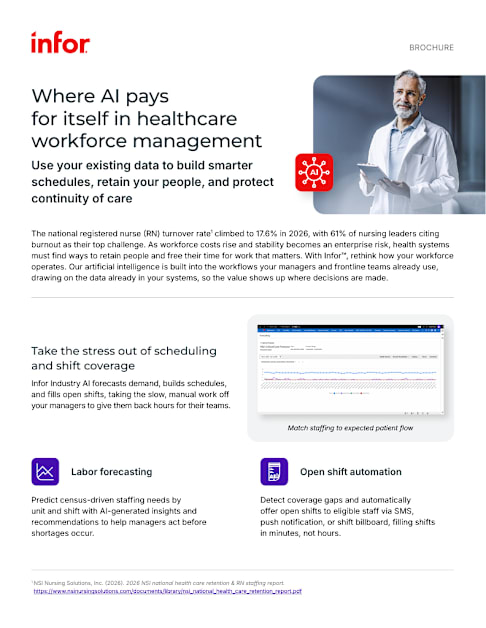
Where AI can actually pay off in workforce management

See how practical AI can help healthcare organizations forecast demand, fill shifts, reduce manual work and make workforce decisions with better information.

What changes when workforce data lives in one place

Disconnected HR, payroll, workforce and talent systems create work for the people who are supposed to be managing the workforce. See how connected technology can simplify operations and create...

When workforce operations work better, people feel the difference

Deployed across 250 organizations, Infor WFM is reshaping how work gets done.

Explore


See how healthcare organizations are putting it into practice

Once organizations establish trusted data and connected operations, they can begin transforming information into action.
Leading health systems are using stronger data management, contract intelligence, automation, and AI to improve efficiency, reduce manual effort, strengthen resilience, and create more proactive supply chain operations.

Beyond go-live: Making workforce technology part of the way people work

CHILDREN'S OF ALABAMA

Going live is only the beginning. See how Children’s of Alabama drove workforce adoption and improved scheduling, payroll and frontline processes by making WFM part of everyda...

Building a better workforce experience at scale

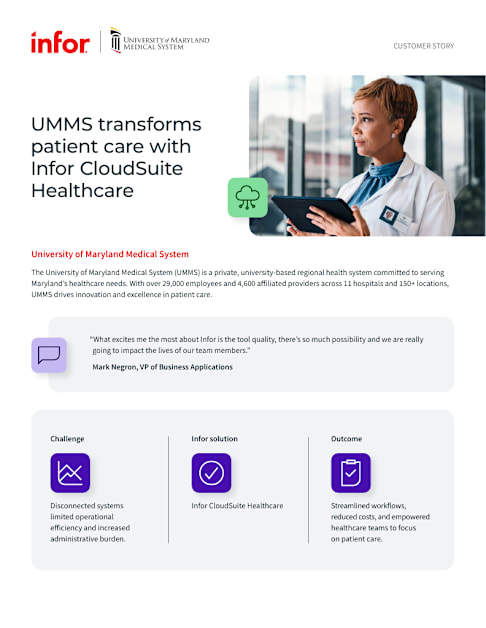
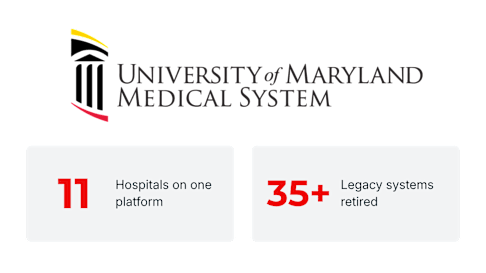
UNIVERSITY OF MARYLAND MEDICAL SYSTEM

See why UMMS rethought its workforce management platform and how a more unified approach can simplify scheduling and improve the experience for frontline employees across a complex health syst...

Rethinking healthcare workforce management

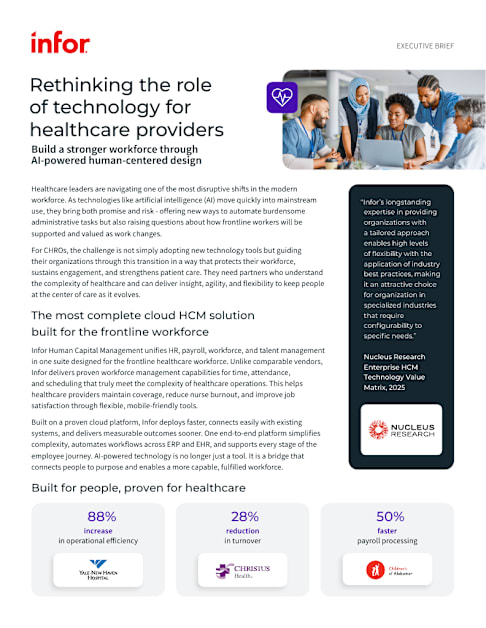
Workforce challenges are no longer just an HR issue. Staffing shortages, labor costs, employee expectations, compliance requirements, and changing patient demand all put pressure on healthcare organizations to think differently about how they manage their people.
Explore the research and executive perspective behind a more connected approach to workforce management, and see why bringing workforce, operational, and financial priorities together can create a stronger foundation for both employees and the organization.

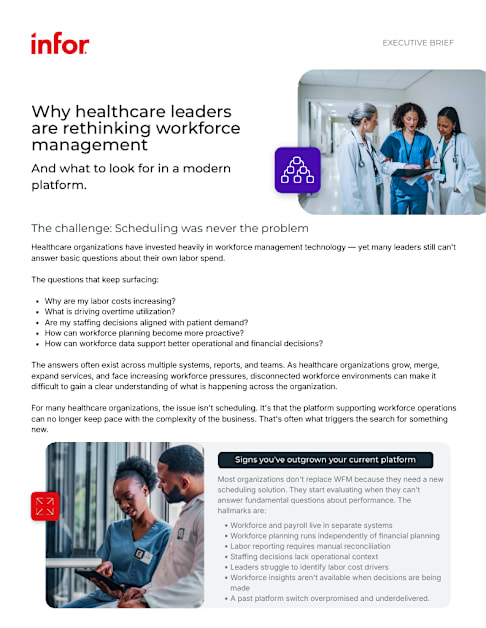
Why healthcare leaders are rethinking workforce management

Healthcare workforce strategy has expanded far beyond recruiting and retention. Scheduling, employee experience, labor costs, compliance, and operational performance are increasingly interconnected, making it harder to improve one area without considering the others. This guide explores how healthcare leaders can break down those silos and build a workforce strategy that better connects people decisions with the operational and financial realities of delivering care.

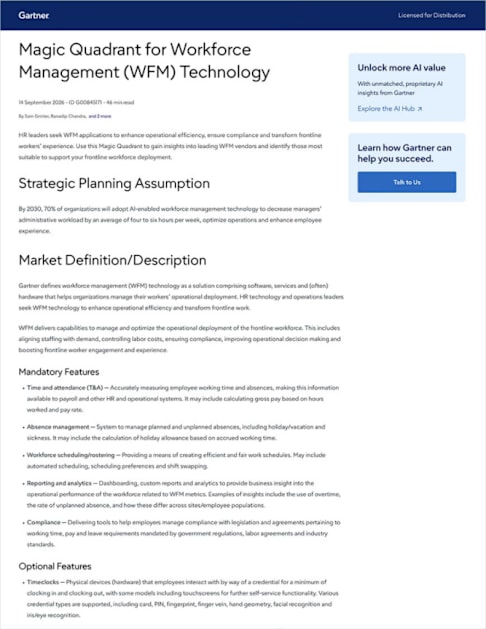
Infor named a Leader in workforce management technology

Modern workforce management requires more than basic scheduling and timekeeping. Healthcare organizations need technology that can support complex workforce requirements while giving employees greater flexibility and leaders better visibility into workforce operations. Gartner named Infor a Leader in its 2026 Magic Quadrant for Workforce Management Applications based on its Ability to Execute and Completeness of Vision.
Get the Gartner report
Anchor: demo

Your workforce challenges aren't isolated. Your workforce technology shouldn't be either.

See how workforce, scheduling, payroll, HR, finance and operational information can work together to help healthcare organizations make smarter staffing decisions, reduce administrative effort and create a better experience for employees and managers.
In a live workforce showcase, we'll focus on the challenges that matter most to your organization and show what connected people operations can look like in practice.
Schedule a workforce showcase

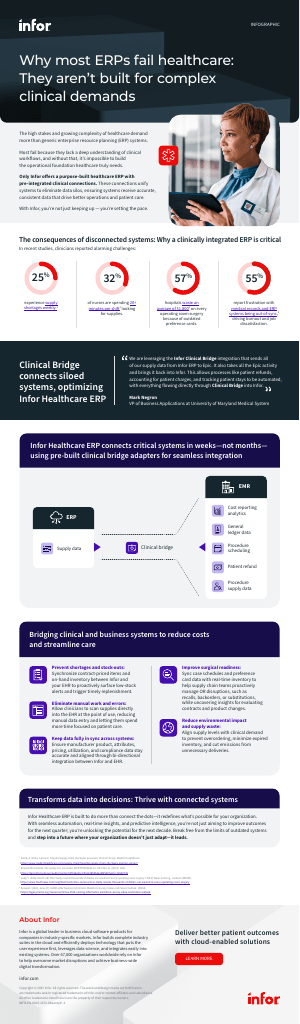
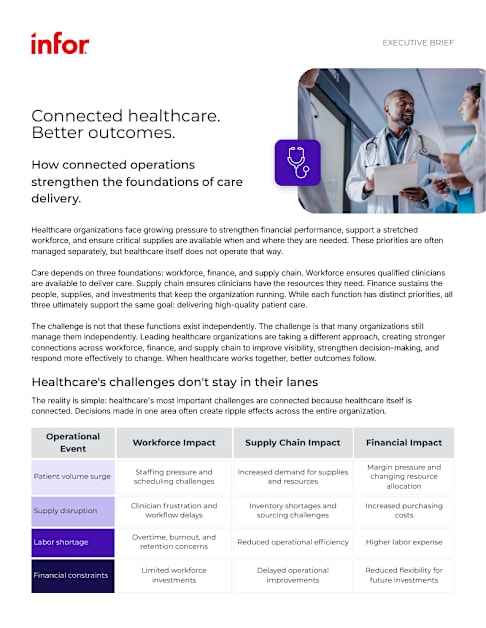
Connected healthcare. Better outcomes.

CloudSuite Healthcare helps healthcare organizations connect supply chain, finance, and clinical operations through a healthcare-specific ERP foundation designed to improve visibility, strengthen governance, reduce complexity, and support better outcomes across the enterprise.